
Ballet Running Title: Constance.
Musically Mason Chamberlin is embarking on a Ballet project. Based on the story of Australia’s first lady medical doctor, Constance Stone. The Ballet “Constance” is proposed to tell the story of Emma Constance Stone and that of her sister Grace Clara Stone both medical doctors, and William Stone (brother) who becomes an early XRAY technician. Tragedy afflicts Constance and later Grace. This will roll out as a conclusion of the dance.
The Gatherings at Stawell 2022
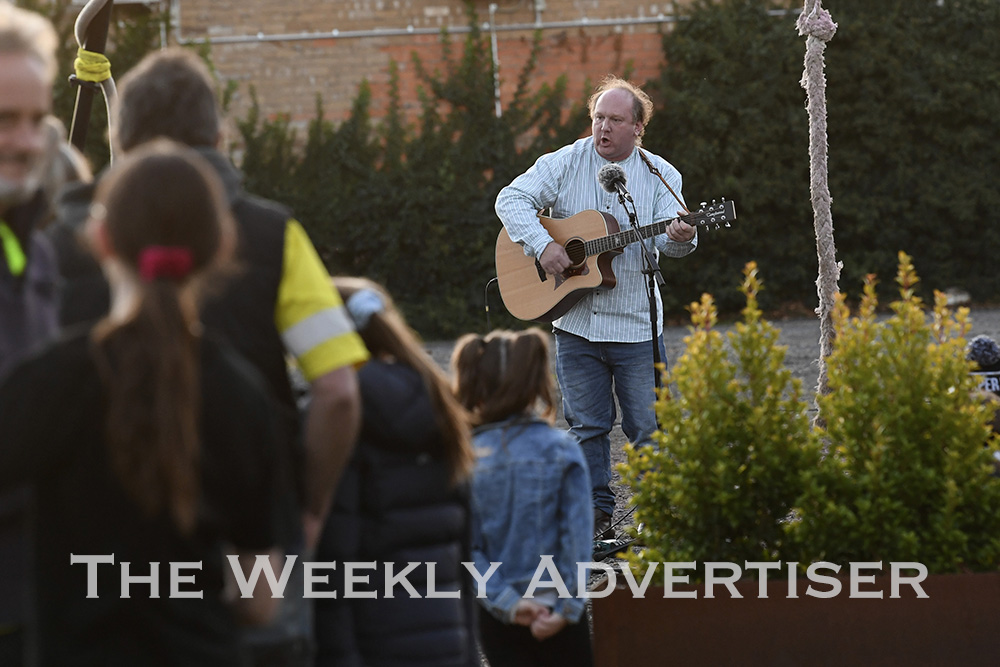
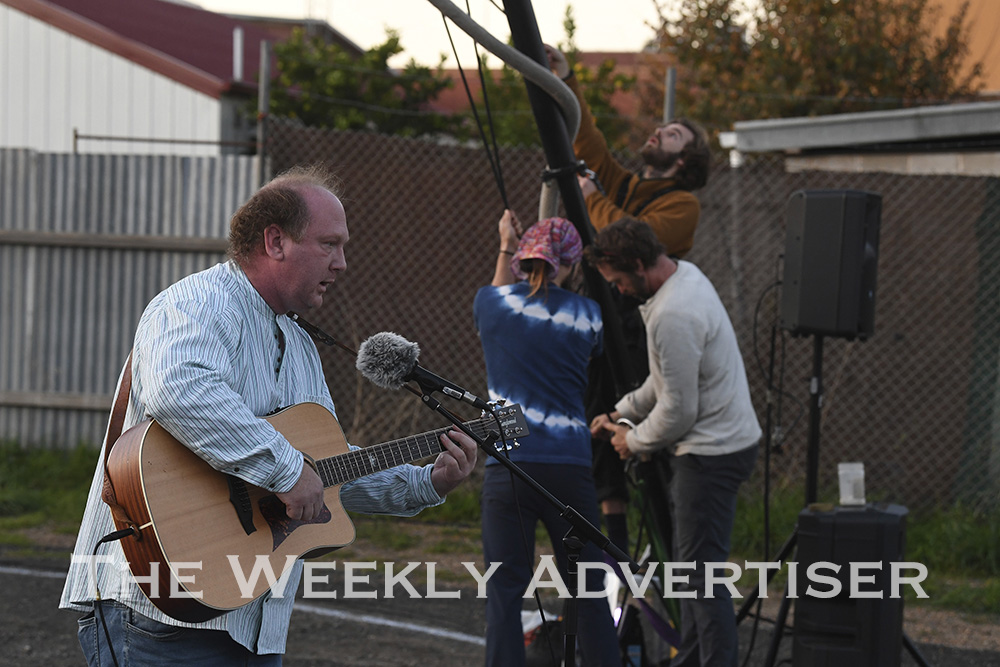
Songs By Mason Chamberlin
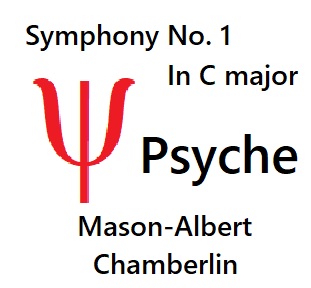
Symphony No. 1 in C Major “Psyche” 2017.
On Tuesday 10th of October, 2017, ABC Radio Melbourne presented Mason Chamberlin’s story behind his first symphony “Psyche” which like my second symphony “Asters in the Wind” both are largely autobiographical, Written from music he sang from his imagination as a boy.
Symphony Number 1 is the expression of his struggle with organic psychosis he experienced through a malfunction of the hypothalamus. https://www.abc.net.au/news/2017-10-10/mason-chamberlin-turned-his-psychosis-into-a-symphony/9026786
The broadcast on ABC Radio Melbourne was broadcast on 10th of October 2017 at 1.00pm https://www.abc.net.au/listen/programs/melbourne-afternoons/victorian-musician-writes-symphony-about-his-psychosis/9035416
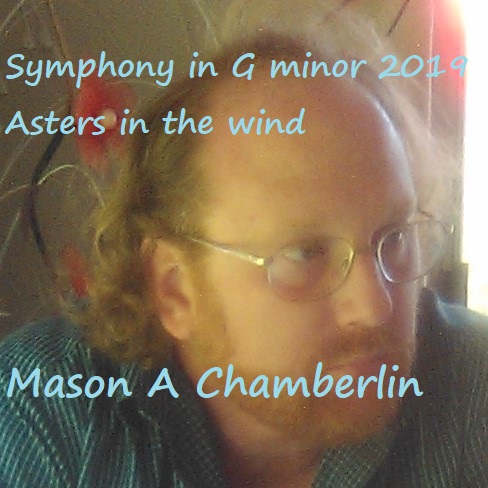
PDF Symphony No. 2 in G minor “Asters in the Wind” 2019.
Thinking about music and Geometry
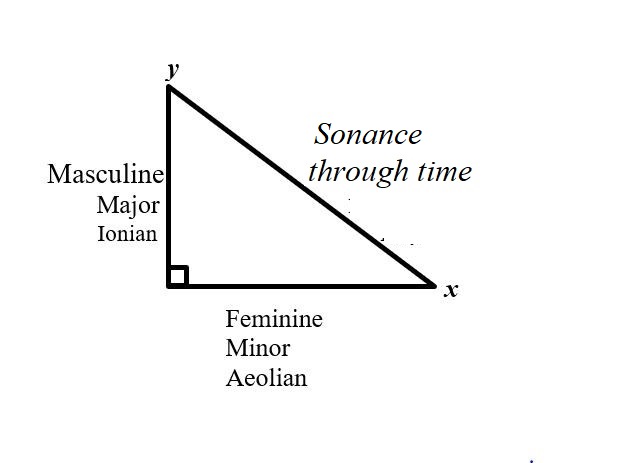
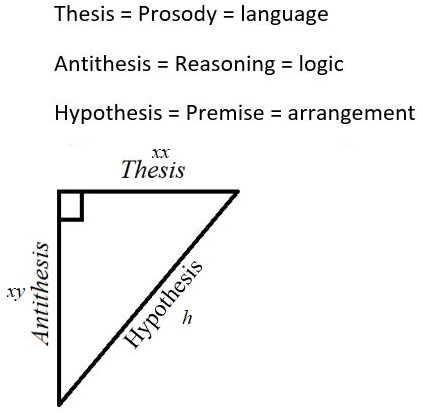
Thetics of music
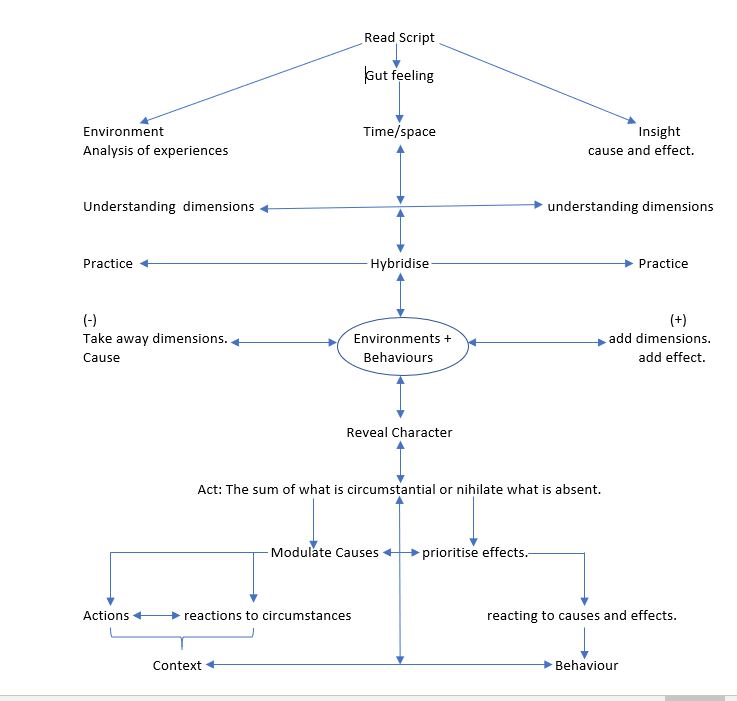
How does the musician interpret the meaning of a musical script?
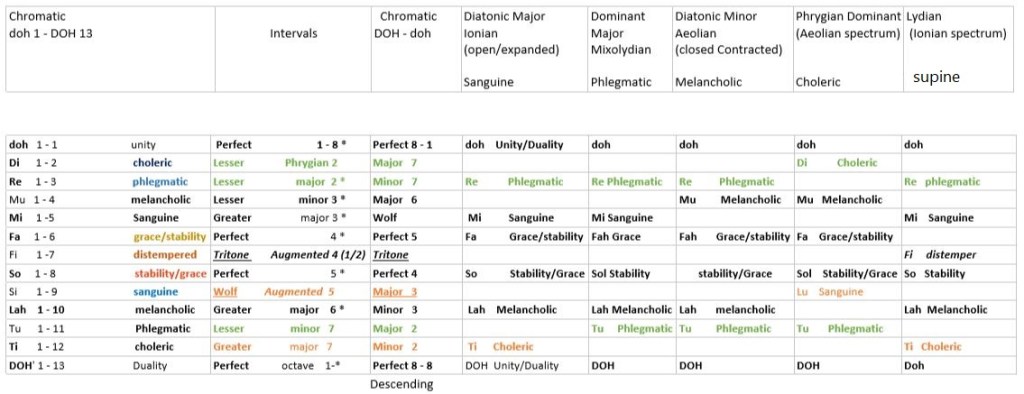
The chromatic modes of the scale
Below is the makeup of the modes of the musical scale. The modes are worked out chromatically: the study of this is ongoing.
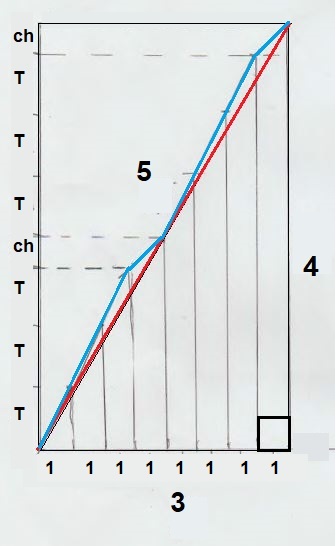
The geometric shape of the Major Scale (Ionian Mode)
This interpretation follows the shape of a right angled triangle.
Musical Pyramids.
Inspired by abstract artist Wassily Kandinsky, who was a synesthete Interpreting the sensations of musical sounds in the forms of colours within pyramids. The Pyramids represent the shapes that make up musical triads (chords) and the colours represent the tones that express the sounds.
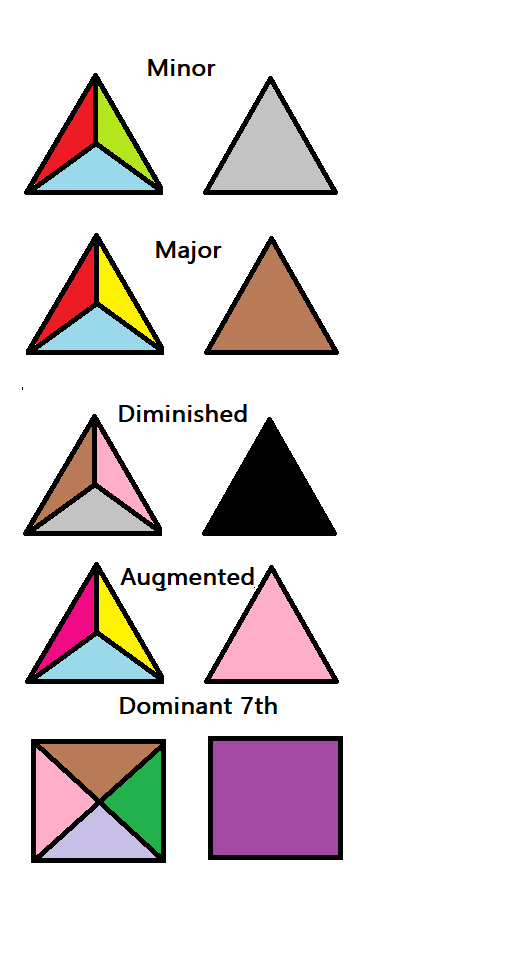
The isosceles triangles on the right sides of the pyramids are the seats of the pyramids and also the square at the seat of the tetrahedron; the colours of the “seats” are identifiers of the degrees of the chromatic scale that in music are the sounds that make up the place of the chords relative to the chromatic positions they sit and their “timbre” or “tone colour”
The “Tetrahedron” expresses the Dominant 7th Chord in music: made up of a chord on the fifth note above the tonic (home note of the key) and the addition of the 4th note above the key note (subdominant, which is the seventh note of the dominant chord, thus making it a dominant seventh chord.
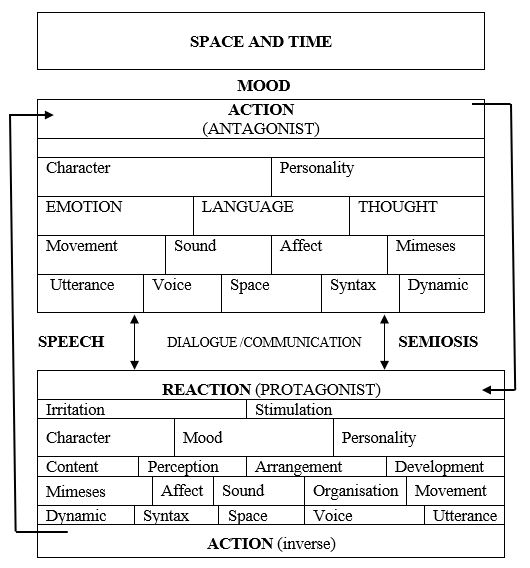
Interpretation of character
The semiotic style of interpreting character has been chosen to explore the spatial and temporal aspects of interpreting the roles of character. This is important in the arts of opera and oratorio. Also the whole orchestra may interpret tone poems like those of Claude Debussy or Arnold Schonberg.
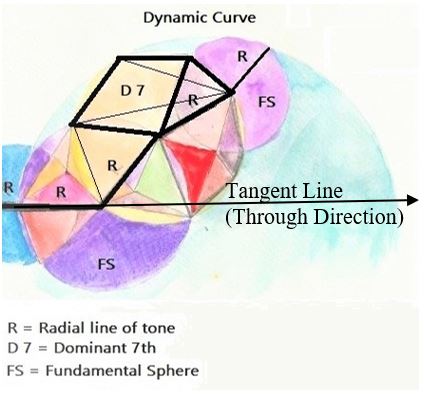
A geometric study into the tangents of musical line through time.
An expression through study of the melodic curvature (Dynamic Curve) in relation to the Tangent Line. These constructs show through the direction in space an time. The colours form the expressions of emotional tone suspending the linear theme above, in music such a theme might be the melody.
Cantata of Given Dignities
Look at the Tiger
Audio file above: Look at the tiger is a folk art-song written when Mason Chamberlin was age 15. It is his favourite work in the genera of Cosmopolitan Folk. copyright 1995 M-A. Chamberlin.
My music manuscripts are available in Trove at the National Library of Australia website and can be downloaded free. https://trove.nla.gov.au/search/category/music?keyword=Mason%20A%20Chamberlin
 Mason Chamberlin Artist and Musician